
You’re in the middle of meal prep for the week when suddenly everything goes dark. Your first thought? “How long will my food last?” If you’re like most urban women, your fridge and freezer represent a significant investment – one you can’t afford to lose every time the power goes out.
The good news? With the right knowledge and a few simple preparations, you can protect your food investment and keep your family fed safely, even when Mother Nature has other plans.
Before the Storm: Smart Preparation That Saves Money
The best time to prep for a power outage is when your lights are still on. These simple steps cost almost nothing but can save you hundreds in spoiled groceries.
Set Up Your Temperature Monitors
Invest in appliance thermometers for both your fridge and freezer – they’re usually under $10 each. Your refrigerator should stay at 40°F or below, and your freezer at 0°F or below. These little devices become your best friends when the power comes back on and you’re deciding what’s safe to keep.
Create Emergency Ice
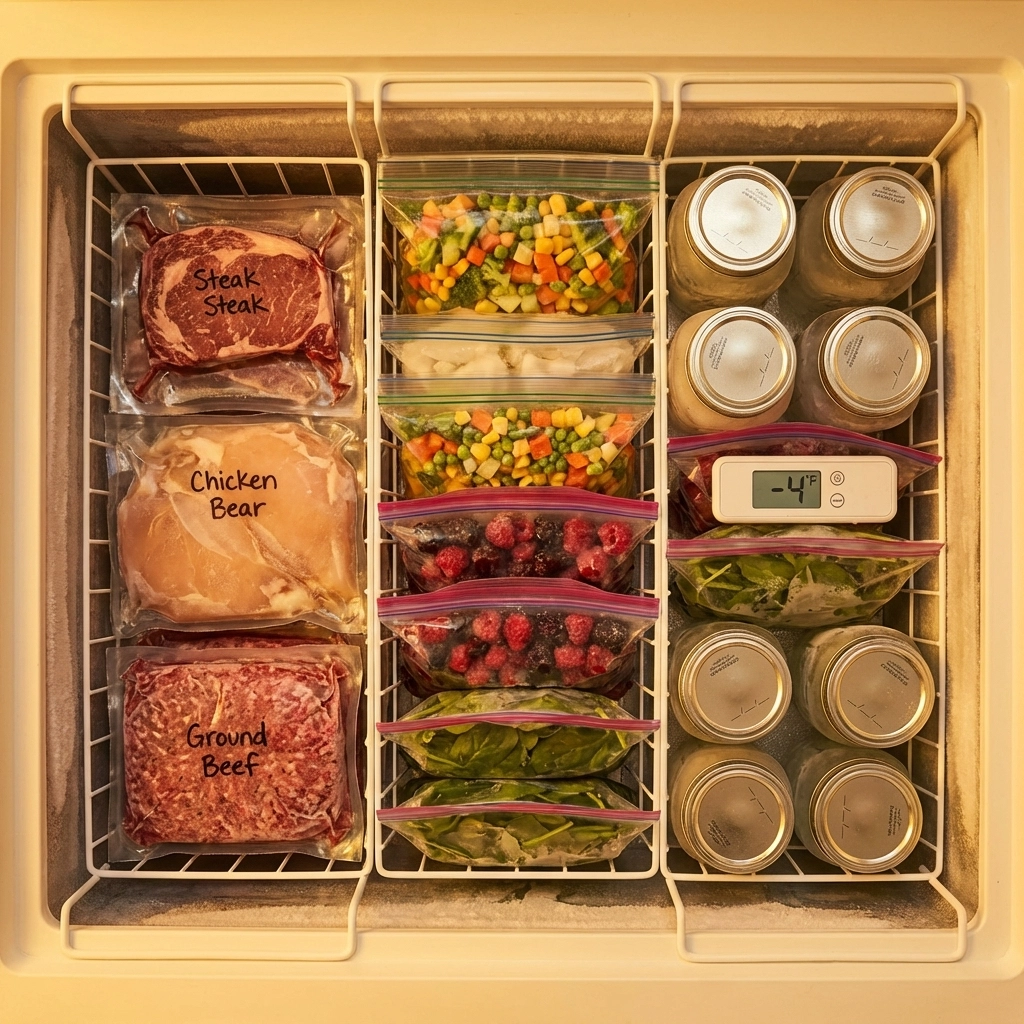
Fill containers with water and freeze them now. Mason jars, empty yogurt containers, or even freezer bags work perfectly. When the power goes out, these become your emergency ice packs. Pro tip: Use containers that fit the shape of your cooler for maximum efficiency. If you’re wondering how having ice will make a difference, note that ice actually melts more slowly than you think, especially in a freezer or cooler.
Strategic Food Placement
Group foods together in your freezer – they’ll keep each other cold longer. Think of it as a food buddy system. A full freezer maintains temperature for about 48 hours, while a half-full one only lasts about 24 hours. If your freezer isn’t full, fill empty spaces with those water containers we just talked about.
The 24-Hour Freeze Rule
Before any predicted storms, freeze items you might not use immediately: milk, leftovers, fresh meat, and produce that’s about to go bad. This extends their life and gives you more flexibility during an outage.
When the Lights Go Out: Your Action Plan
Keep Those Doors Closed
This is your golden rule. Every time you open the fridge or freezer, you’re letting precious cold air escape. Plan what you need before opening, and get it quickly. An unopened refrigerator stays cold for about 4 hours – that’s your window of safety.
The 4-Hour Decision Point
Mark the time when your power goes out. After 4 hours, it’s time to move perishable refrigerated items to coolers with ice. This isn’t negotiable – it’s the difference between safe food and a potential trip to the emergency room.
Smart Cooler Strategy
If you don’t have enough coolers, prioritize: meat, dairy, and leftovers go first. Hard cheeses, condiments, and fresh fruits can usually handle room temperature better. Use separate coolers for different food types if possible – it makes organization easier later.
Tip: If you’re past the 4-hour limit and you live in a cold climate or, the temperature in your area is below 40 degrees, you can place your items outside (preferably in a cooler) or even in the snow! You’ll want to do this if you’re using a non-electric heater in your home. The ambient warmth will also warm up the powerless fridge, which is not what you want.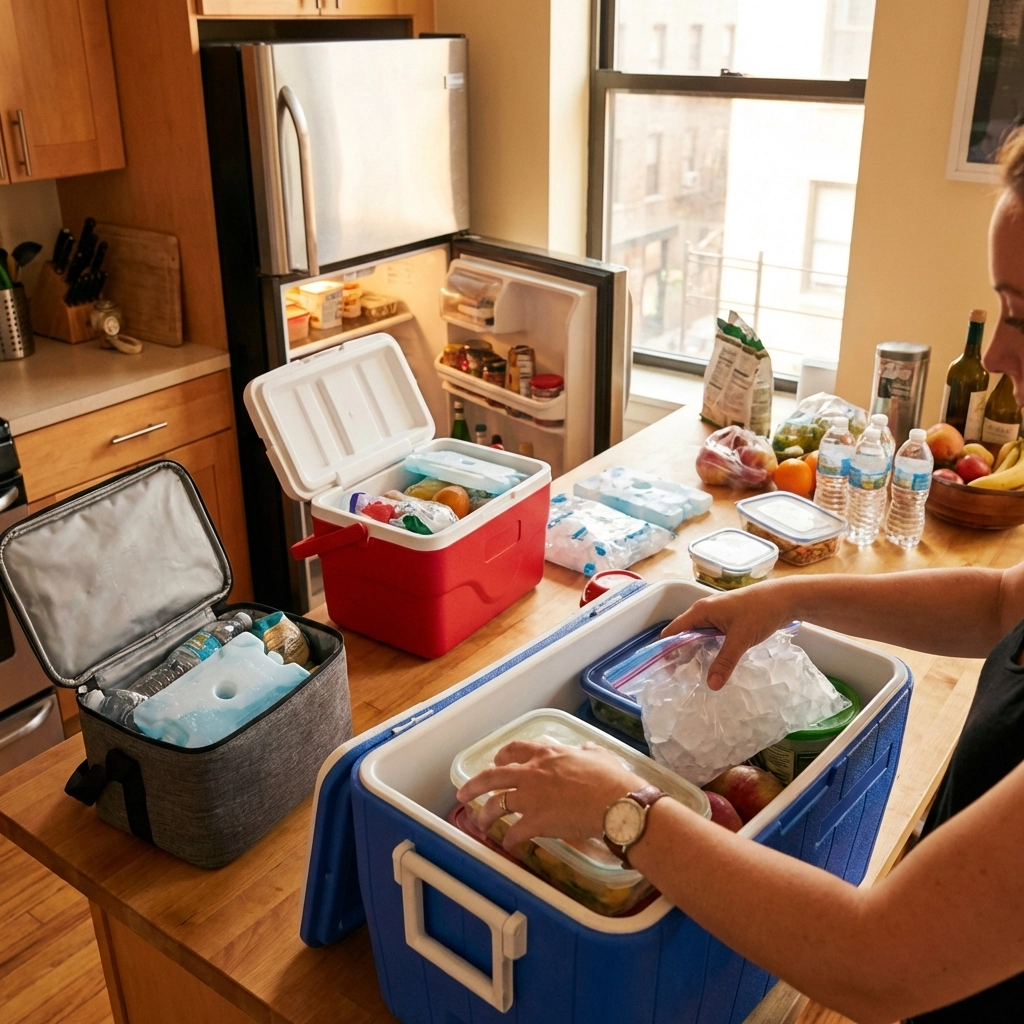
Power’s Back: The Great Food Assessment
Temperature Check First
Before you do anything else, check those appliance thermometers. If your freezer stayed at 40°F or below, you can safely refreeze everything. If it got warmer, you have some decisions to make.
The Ice Crystal Test
For frozen foods, look for ice crystals. If they’re still there and the food feels cold, it’s generally safe to refreeze or cook immediately. No ice crystals? It’s time to say goodbye.
The “Penny Test” is a hack that lets you know that you lost power while you were gone. Leave a penny on top of an ice cube. If the penny is still on top, you should be good. If the penny is in the middle of the cube, you’ve lost power for over 8 hours. If it’s on the bottom of the ice tray, the power was out for an extensive period, and everything should be thrown out.
When in Doubt, Throw It Out
This might hurt your budget in the short term, but food poisoning costs way more than groceries. Never taste food to test if it’s safe – your nose and eyes aren’t reliable judges of dangerous bacteria.
Urban Space, Creative Solutions
Living in a small apartment doesn’t mean you can’t be prepared. Here are storage hacks that work in tight spaces:
The Cooler Collection
Soft-sided coolers store flat under beds or in closets. Nesting coolers save space when not in use. Even a large insulated bag can help in a pinch.
Freezer Door Organization
Keep emergency supplies in your freezer door – water containers, gel ice packs, and a thermometer. The door area gets warm first, so use it for your prep supplies, not food storage.
Vertical Storage
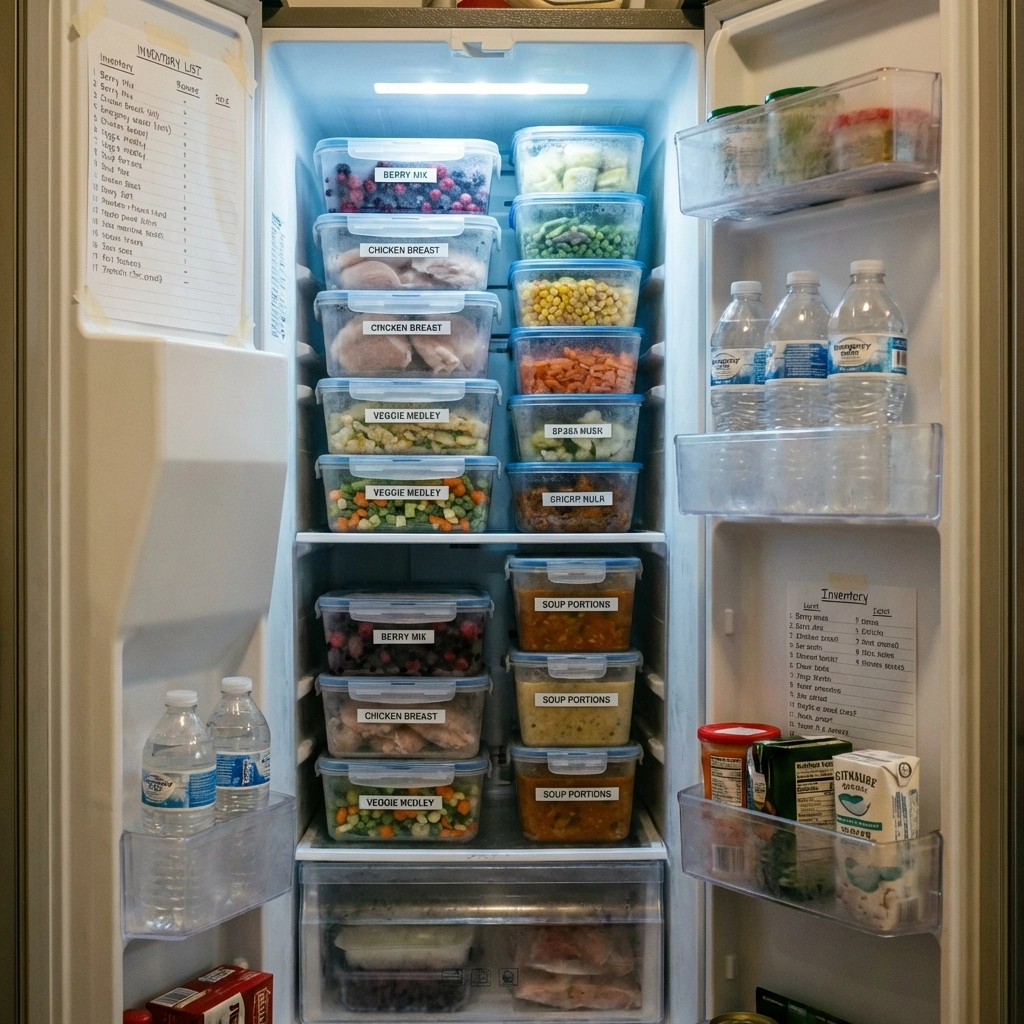
Use stackable containers to maximize freezer space. Label everything with dates. The more organized you are, the faster you can assess what’s safe later.
Budget-Friendly Tools That Make a Difference
You don’t need expensive equipment to stay prepared. These affordable items pack a big punch:
Essential Equipment Under $50:
- Appliance thermometers ($8-15 each)
- Soft-sided cooler ($15-25)
- Gel ice packs ($10-20 for a set)
- Battery-powered radio for updates ($15-30)
Free Solutions:
- Download weather apps with power outage alerts
- Freeze water in empty containers
- Use towels or blankets to insulate coolers
- Group freezer items together
The $20 Emergency Kit:
One thermometer, one soft cooler, and basic ice packs. This minimal investment can save you hundreds in spoiled food.
Quick Reference Guide: What Stays, What Goes
Safe Without Refrigeration:
- Hard cheeses, butter
- Fresh fruits (uncut), vegetables (whole)
- Condiments, jams, peanut butter
- Bread, crackers, canned goods
Must Stay Cold – Discard if Above 40°F for 2+ Hours:
- Milk, yogurt, soft cheeses
- Fresh eggs
- Meat, poultry, seafood
- Leftovers, cooked pasta, soups
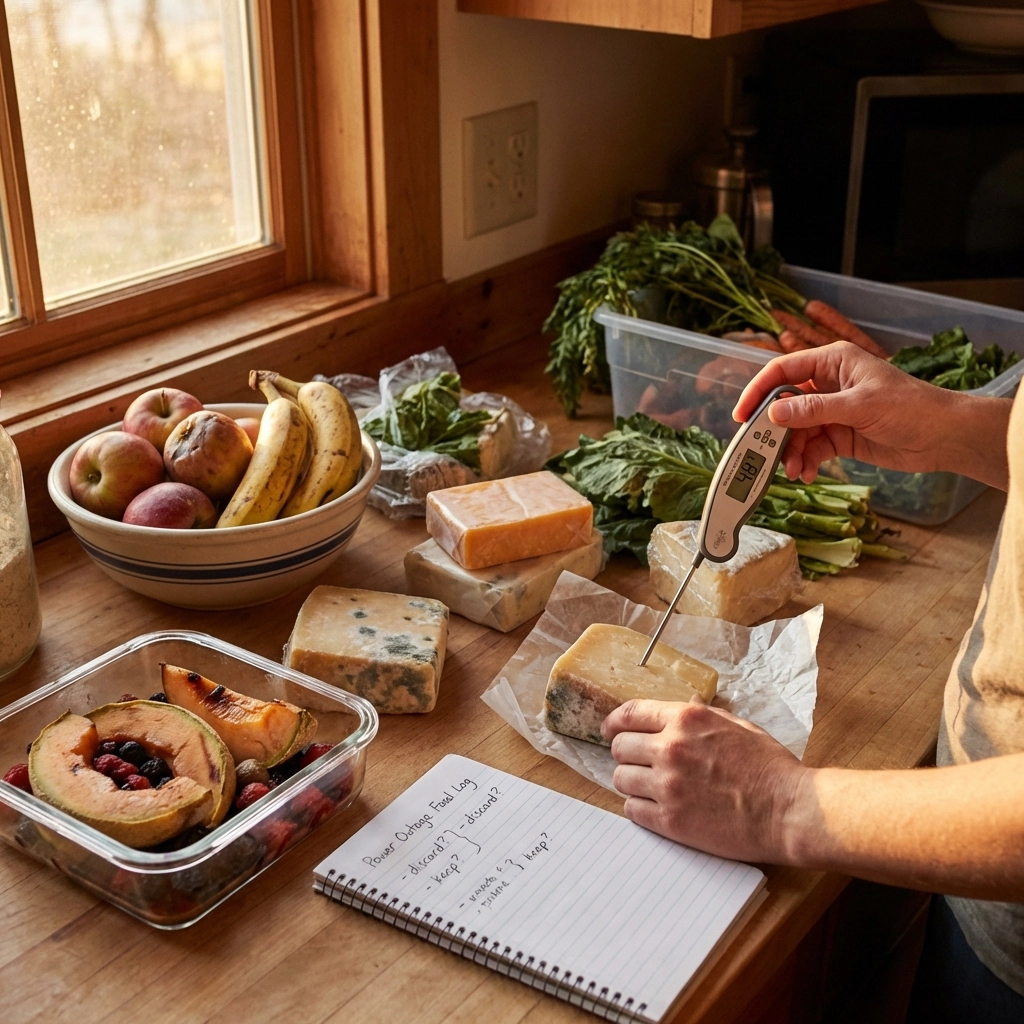
Gray Area – Use Your Judgment:
- Hard vegetables may be okay if still firm
- Well-wrapped hard cheeses often survive
- Whole fruits usually fine, cut fruits need to go
The Real Talk: When to Cut Your Losses
Sometimes the smartest prep decision is knowing when to let go. If you’re unsure about expensive items like meat, cook them immediately if they still have ice crystals. You can always freeze cooked meat later.
For families on tight budgets, losing groceries hurts. But medical bills hurt more. Trust your preparation, trust your thermometers, and trust your instincts.
Your Next Steps
Power outages don’t have to mean panic or significant financial loss. With these strategies, you’re not just surviving – you’re thriving through whatever comes your way.
Want more practical emergency preparedness tips that actually work for real women in real situations? Subscribe to my newsletter for weekly insights that don’t require a bunker or a fortune. Plus, check out my latest podcast episode where we dive deeper into apartment-friendly emergency food storage that won’t take over your life.
Remember: You’ve got this. You’re more prepared than you think, and now you’re even more ready for whatever comes next.