
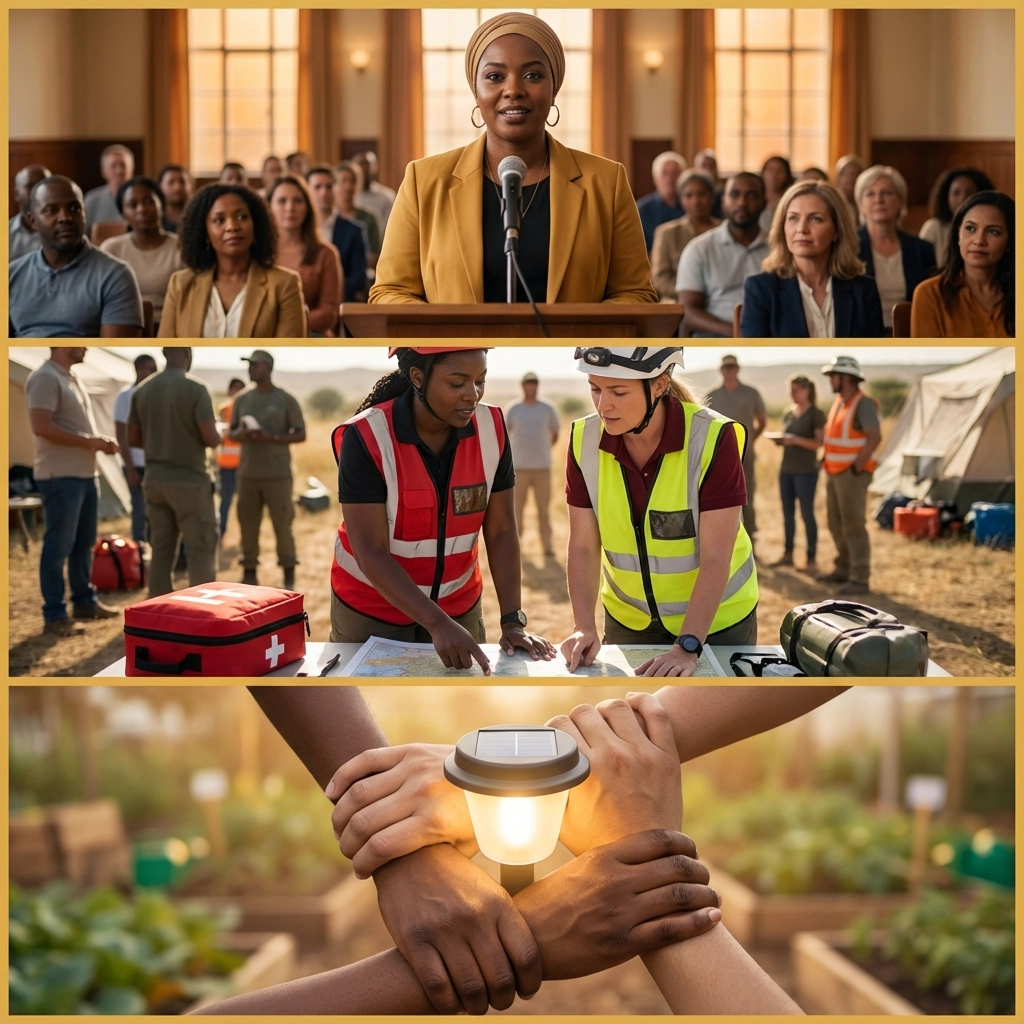
When most people think about disaster preparedness, they picture emergency management officials in command centers, military-style response teams, and technical equipment. But what if I told you that some of the most effective disaster preparedness strategies are happening in kitchens, community centers, and neighborhood networks led by women?
Women’s leadership in disaster preparedness isn’t just about adding female voices to existing systems: it’s about completely reimagining how we approach resilience, community safety, and emergency planning. And honestly? It’s time we all paid attention.
The Problem with Traditional Disaster Preparedness
Traditional disaster risk reduction has operated on a top-down model for decades. Think government agencies creating evacuation plans without asking locals about flood patterns, or emergency kits designed by people who’ve never had to manage a household during a crisis.
This approach treats communities as passive recipients of protection rather than active participants in their own safety. It relies heavily on technical solutions and hierarchical command structures that often miss the most crucial element: how real people actually live, work, and survive during emergencies.
But women are changing this entire framework, and the results are remarkable.
The Power of Lived Experience
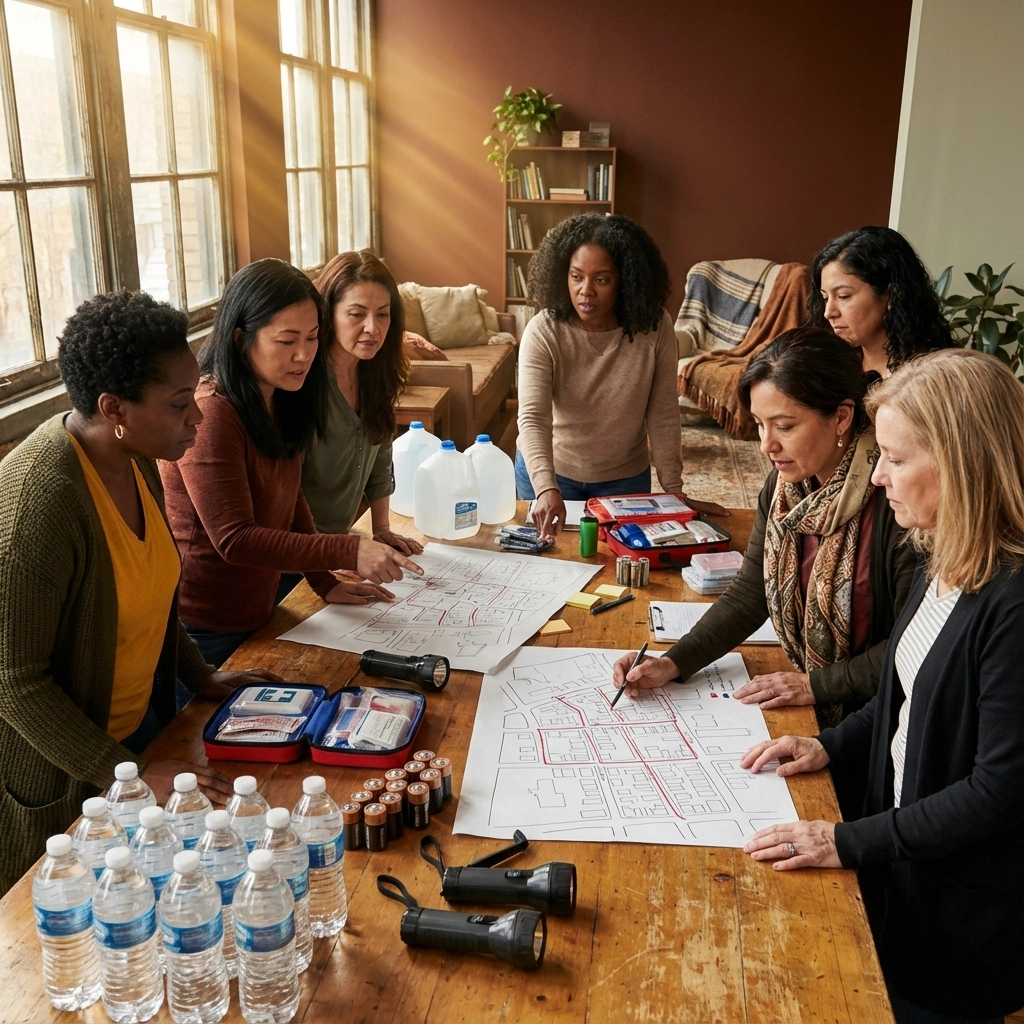
Women bring something invaluable to disaster preparedness: practical, ground-level knowledge that comes from managing households, caring for family members, and maintaining community connections.
When women participate meaningfully in disaster planning, they contribute insights about household needs, local geography, social networks, sanitation challenges, and food security that strengthen preparedness plans in ways that external experts simply can’t replicate.
Take Xiangkhouang Province in Laos, where women serving on Village Disaster Management Committees completely transformed their community’s approach to emergency planning. These women didn’t just participate: they led efforts to map evacuation routes, designate safe shelters, and organize early-warning systems. The key difference? Their deep understanding of local conditions and existing social networks made these strategies genuinely workable, not just good on paper.
The same thing happened in Papua New Guinea, where women’s involvement led to preparedness plans that communities actually owned and used, rather than plans that sat in filing cabinets collecting dust.
From Risk Management to Care-Centered Resilience
Here’s where women’s leadership gets really revolutionary: it shifts disaster preparedness from being purely about risk management to being fundamentally about care and community.
Women’s caregiving roles and community networks aren’t vulnerabilities to be protected: they’re assets that build genuine resilience. When women lead preparedness efforts, they naturally incorporate considerations for children, elderly community members, people with disabilities, and other vulnerable groups that might be afterthoughts in traditional planning.
This care-centered approach means disaster preparedness becomes woven into daily life rather than remaining an abstract policy exercise. It becomes about knowing which neighbor needs medication during evacuations, understanding how to maintain food safety without power, and creating systems that work for real families in real situations.
Beyond Emergency Response: Building Adaptive Communities
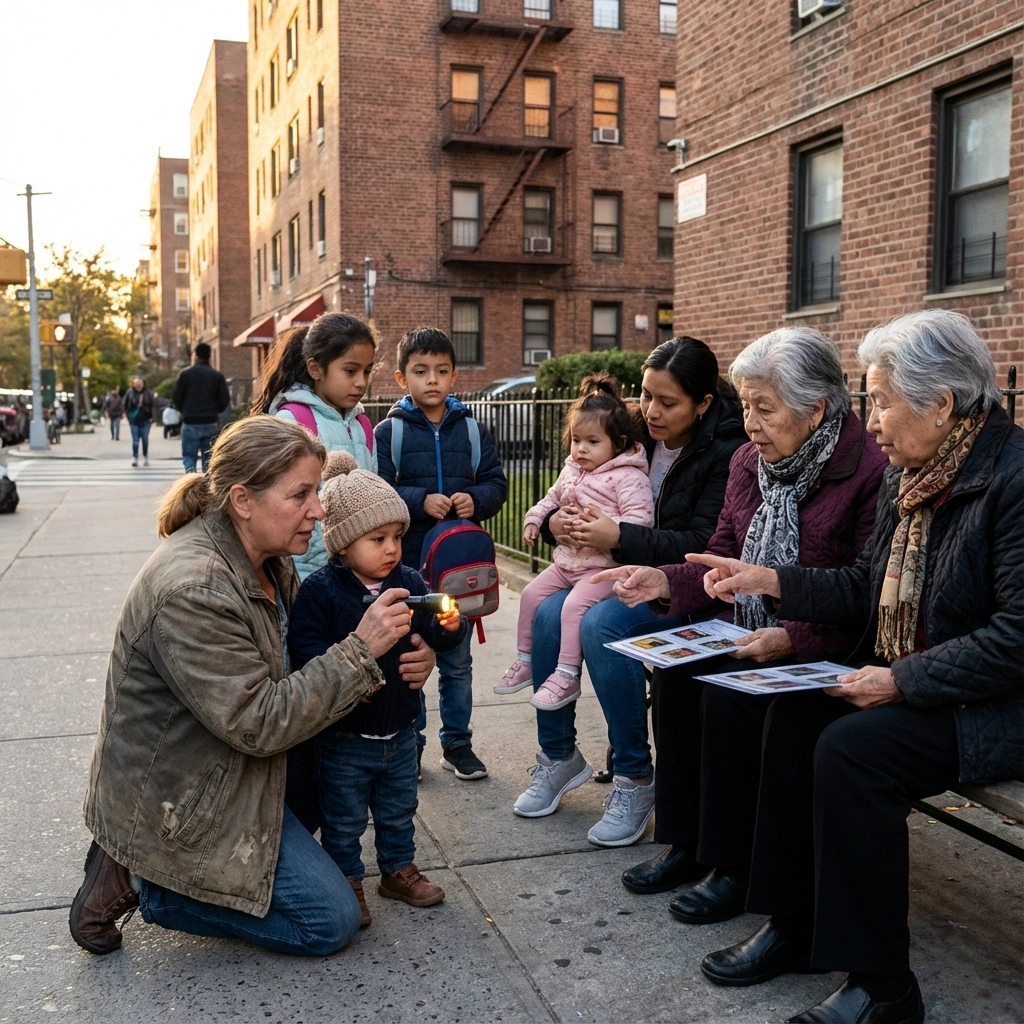
Women’s leadership transforms disaster preparedness from reactive emergency response to proactive community building. Instead of just preparing for specific disasters, women-led initiatives often focus on building overall community resilience that can adapt to various challenges.
This approach prioritizes:
- Social cohesion – Strengthening relationships before disasters strike
- Local resource management – Understanding what’s actually available in the community
- Health and wellness systems – Maintaining care networks during disruptions
- Environmental sustainability – Addressing root causes that worsen disaster impacts
- Economic resilience – Ensuring communities can recover financially
These elements don’t just help during natural disasters: they create stronger, more adaptive communities that can handle whatever challenges come their way.
Real-World Impact: What the Data Shows
The evidence supporting women’s leadership in disaster preparedness isn’t just anecdotal: it’s backed by measurable outcomes. Communities with meaningful women’s participation in disaster planning show:
- More effective early warning systems that actually reach vulnerable populations
- Higher rates of community participation in preparedness activities
- Better integration of local knowledge into official planning processes
- Improved outcomes for children, elderly, and disabled community members
- Greater long-term sustainability of preparedness initiatives
These improvements happen because women’s leadership brings different priorities, different knowledge, and different approaches to problem-solving that complement and enhance traditional preparedness methods. Check out UN Women as an example of women making a difference in crisis management.
Changing How We Think About Leadership Itself
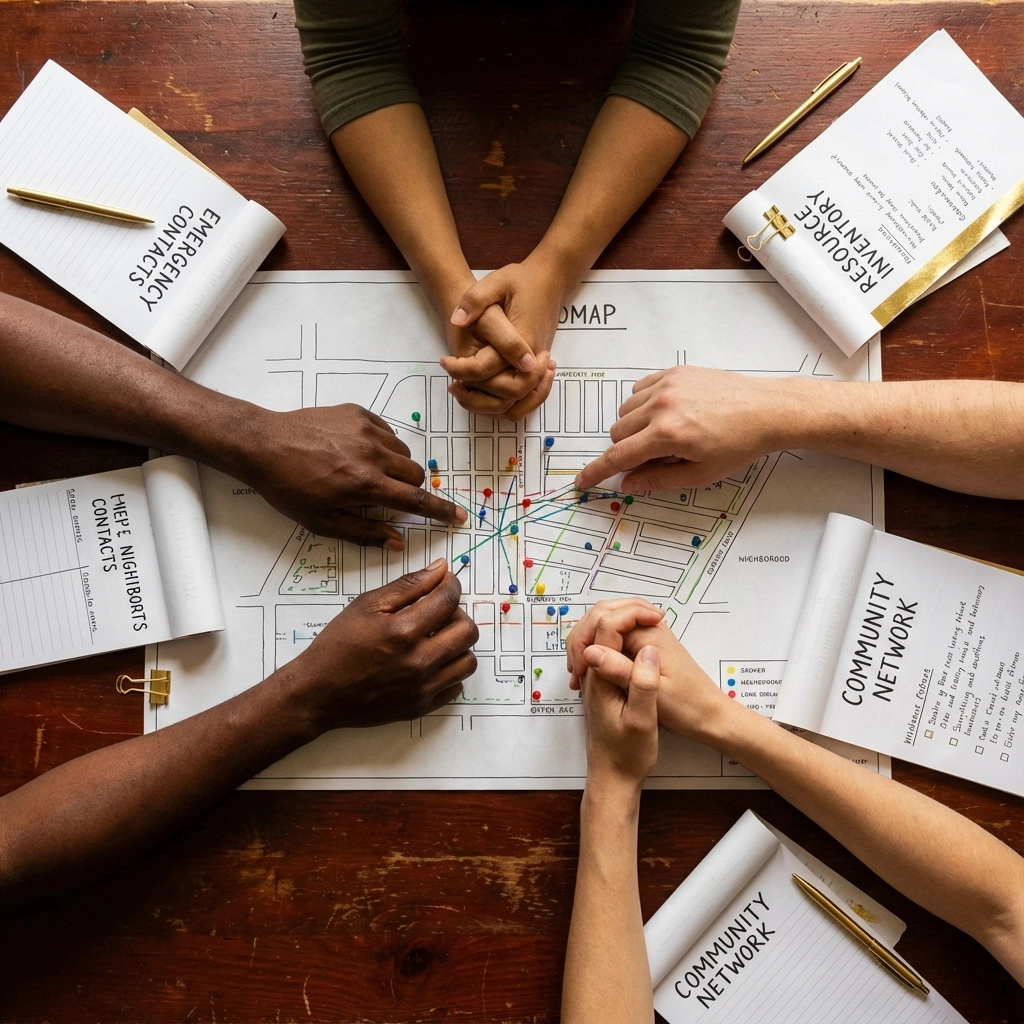
Perhaps the most profound change women bring to disaster preparedness is redefining what leadership looks like in crisis situations. Instead of command-and-control hierarchies, women often model collaborative, network-based leadership that distributes responsibility and builds on collective expertise.
This collaborative approach recognizes that effective disaster preparedness requires diverse perspectives, local knowledge, and community buy-in: not just technical expertise and authority. It values emotional intelligence, relationship-building, and practical problem-solving alongside traditional emergency management skills.
What This Means for All of Us
Whether you’re a seasoned prepper or just starting to think about emergency preparedness, women’s leadership offers valuable lessons that can transform your approach:
Think beyond individual preparedness – Consider how your preparedness connects to and supports your broader community.
Value practical knowledge – The person who knows how to keep a household running during a power outage might have more useful preparedness knowledge than someone with an emergency management degree.
Build relationships first – Strong community connections are often more valuable than expensive emergency equipment.
Include care considerations – Plan for the needs of children, elderly family members, pets, and anyone else who depends on you.
Focus on adaptation – Build flexibility into your preparedness rather than rigid responses to specific scenarios.
The Future of Preparedness is Collaborative
Women’s leadership isn’t about replacing traditional emergency management: it’s about creating more comprehensive, effective, and sustainable approaches to community resilience. When women move from being passive recipients of protection to active leaders in preparedness planning, entire communities become more adaptive and better able to face both immediate and long-term challenges.
This shift represents a fundamental change in how we think about safety, resilience, and community. It recognizes that the people closest to the problems often have the best insights about solutions, and that effective preparedness requires both technical expertise and lived experience.
As we face increasingly complex challenges: from climate change to social disruption to economic uncertainty: we need preparedness approaches that are as adaptable and multifaceted as the communities they serve. Women’s leadership points the way toward that future.
Ready to explore how these insights can transform your own preparedness approach? Check out our latest podcast episode where we dive deeper into community-based preparedness strategies, and don’t forget to sign up for our newsletter to get practical preparedness tips that actually work for real life.

Pingback: Prepared by Design: Why Modern Women Make Amazing Preppers →