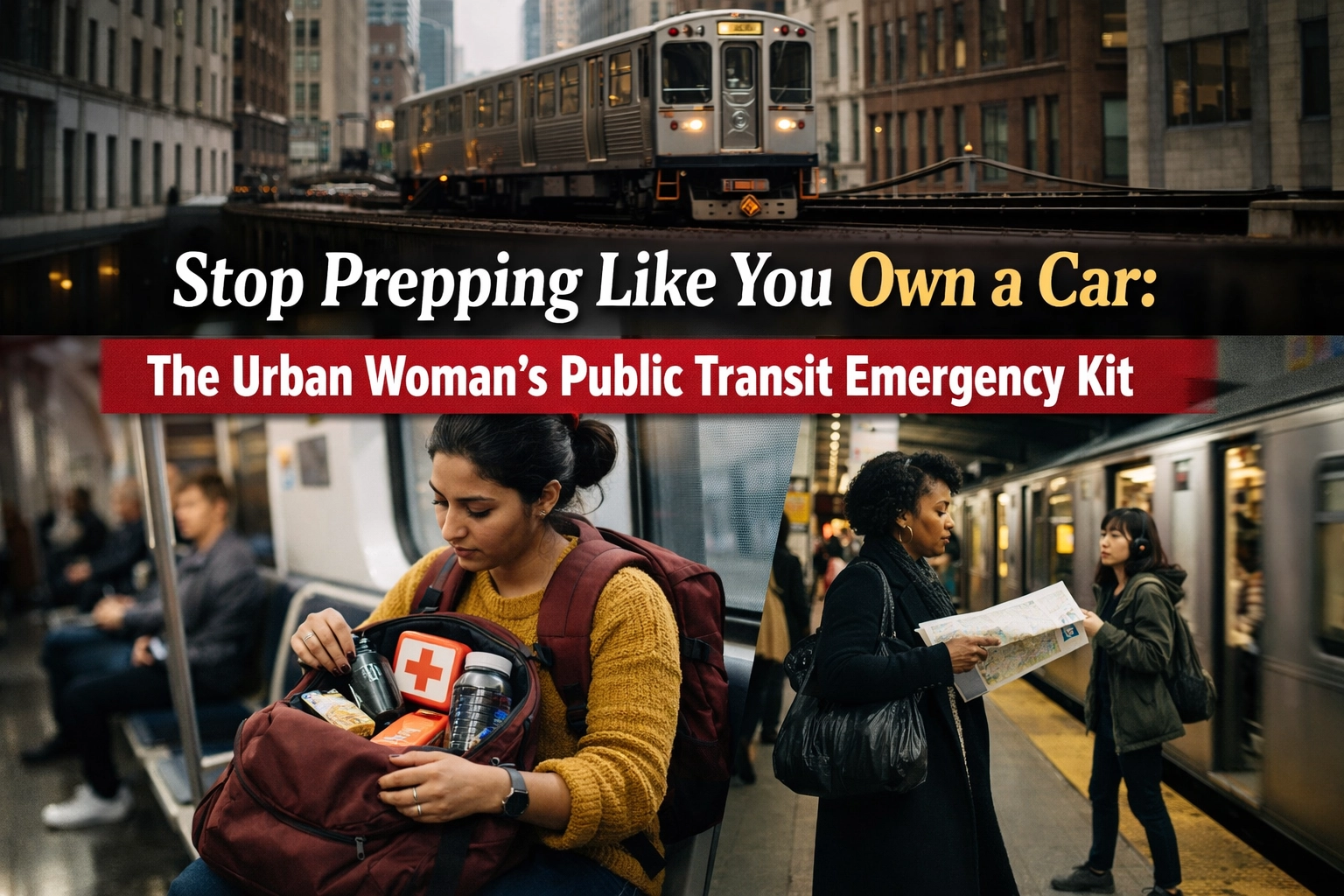
Let me guess, urban lady: you’ve been scrolling through emergency prep blogs or videos, and every single one assumes you’ve got a SUV trunk full of gear, right? “Just stash a 72-hour bug-out bag in your vehicle!” “Keep five gallons of water in your car!” “Store a generator in your garage!”
Yeah, cool. Super helpful when you’re standing on a subway platform at 6 PM, wondering if the trains are running after that massive power outage.
Here’s the thing nobody talks about: most urban emergency prep advice is written by people who’ve never had to sprint for the last train in heels. If your daily commute involves buses, subways, or your own two feet, traditional prep strategies aren’t just impractical; they’re basically useless.
So let’s fix that. Because you deserve emergency plans that actually work for your life.
Why Car-Based Prep Fails City Dwellers
Traditional emergency prep assumes you have storage space, a vehicle to escape in, and probably a garage full of camping gear. But when you’re navigating city life? Your “storage space” is that overcrowded coat closet, your “vehicle” is the unreliable M train, and your “garage” is… well, non-existent.
The reality: everything you need has to fit in your work tote or backpack. It needs to be light enough that you don’t collapse after two blocks. And it absolutely cannot look like you’re carrying a doomsday bunker on your shoulder during your morning commute.
That’s where the urban “get home” bag comes in, a compact, cleverly packed kit designed for one mission: getting you safely from wherever you are back to your apartment when things go sideways.
The Foundation: Your Work Tote Becomes Your Lifeline
Forget those massive tactical backpacks. Your emergency kit needs to blend seamlessly into your everyday life. Think of it as upgrading your regular carry, not adding a separate survival bag you’ll definitely forget at home.
Start with what you’re already carrying, your work tote, crossbody bag, or backpack. Now we’re going to pack it smarter.
Power and Communication (Because Dead Phones Are Useless)
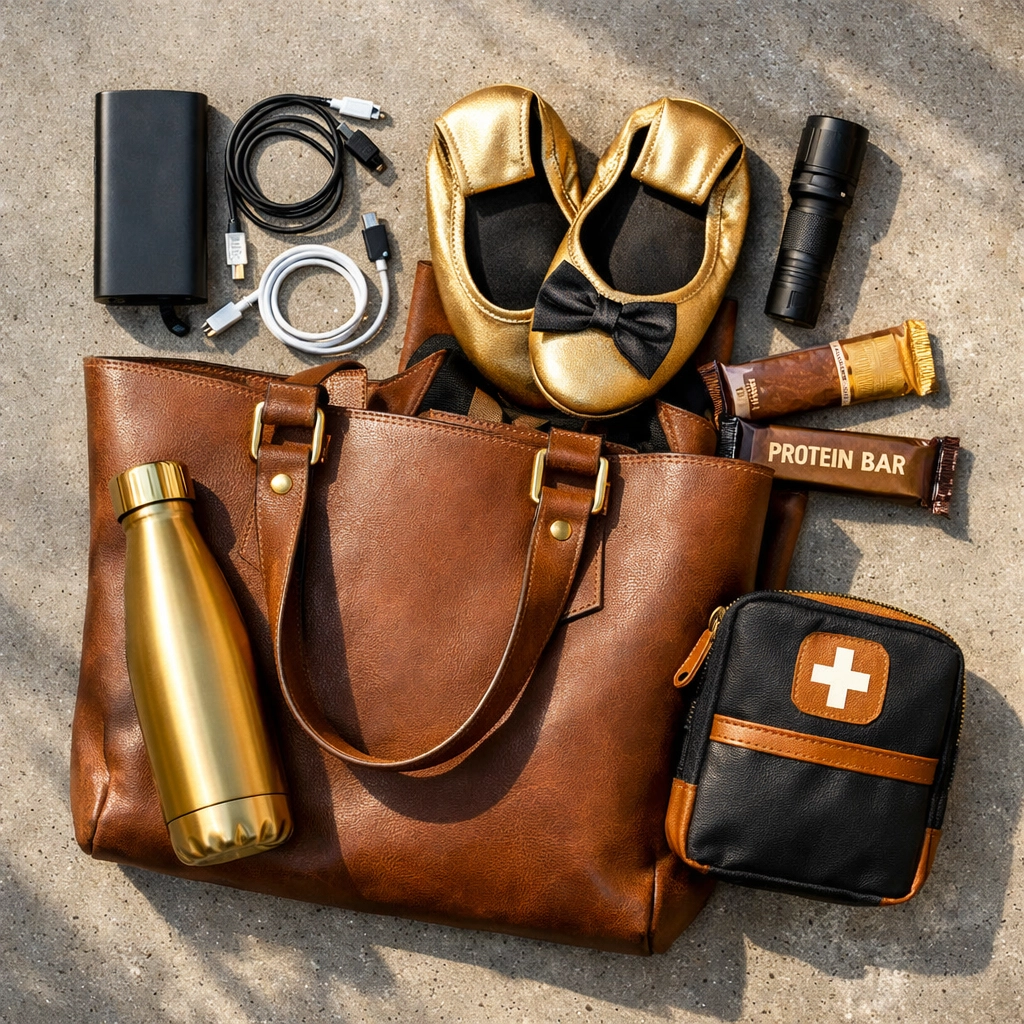
High-capacity portable charger: This is non-negotiable. When the power goes out, cell towers get overloaded, and everyone’s frantically texting. A 20,000mAh charger can bring your phone back from the dead multiple times. Bonus points if it can be solar-charged and has multiple ports so you can help that panicked coworker, too.
Charging cables: Keep a spare set in your bag at all times. You will lose your regular ones. It’s a universal law.
Offline maps: Screenshot your regular routes home before you need them. When the internet’s down, and GPS is spotty, that screenshot of the subway map or walking directions becomes pure gold.
The Shoe Situation (Let’s Talk About Those Heels)
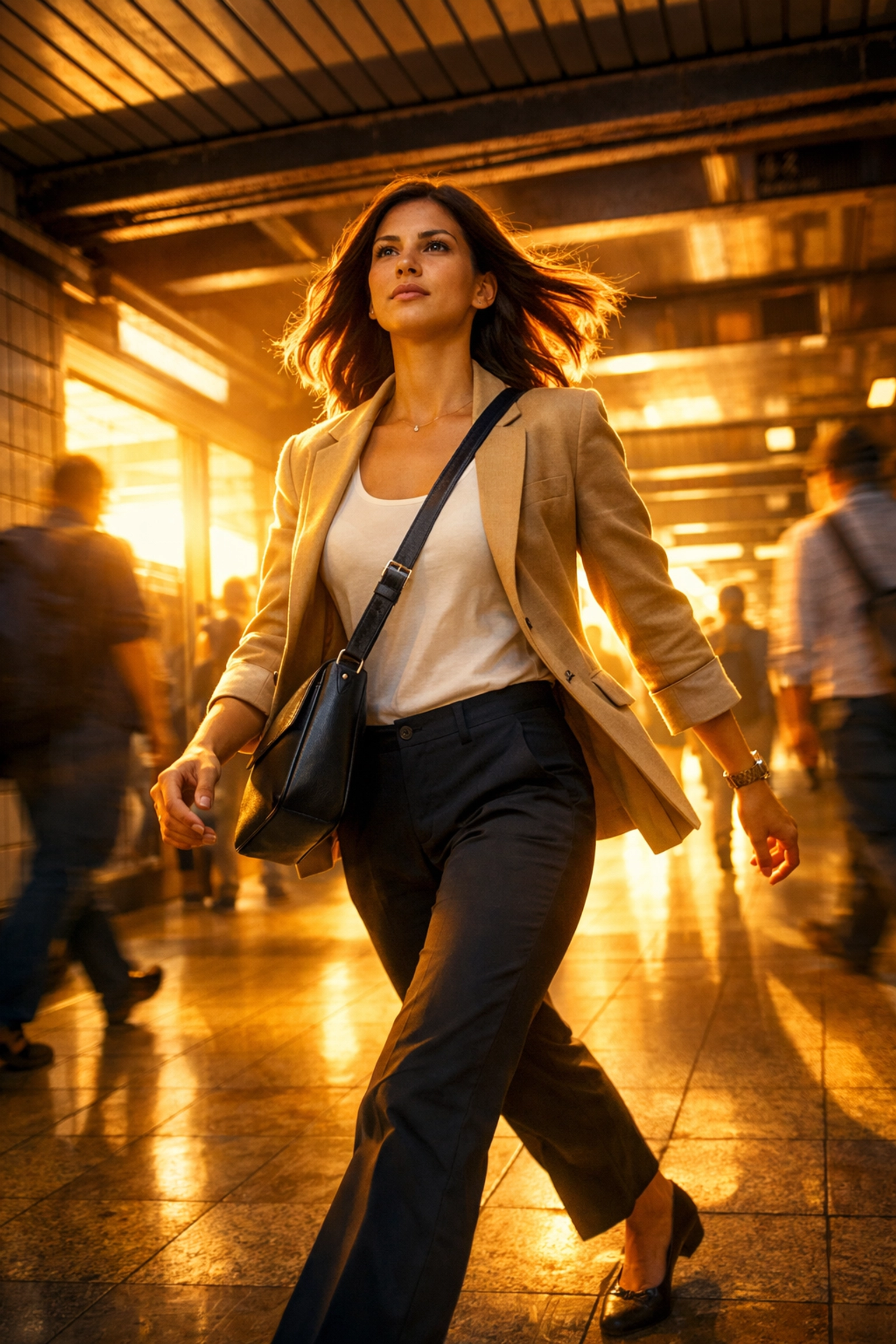
If you’ve ever tried walking twenty blocks home in heels, you already know why this matters. When buses stop running and Uber surges to $300, you need footwear that won’t destroy your feet.
Foldable flats or compact sneakers: These compress down to almost nothing and fit in a gallon ziplock. Your future self, the one walking across town during a transit shutdown, will thank you profusely. Look for brands that specialize in portable shoes; some even come with their own pouches.
Blister prevention: Throw in a few Band-Aids and moleskin. They weigh nothing and save everything when you’re mile three into an unexpected hike home.
Personal Safety Tools That Fit Your Reality
Safety in the city requires different tools than safety in suburbia. You’re not worried about bears; you’re thinking about walking through unfamiliar neighborhoods after dark when your usual route is blocked.
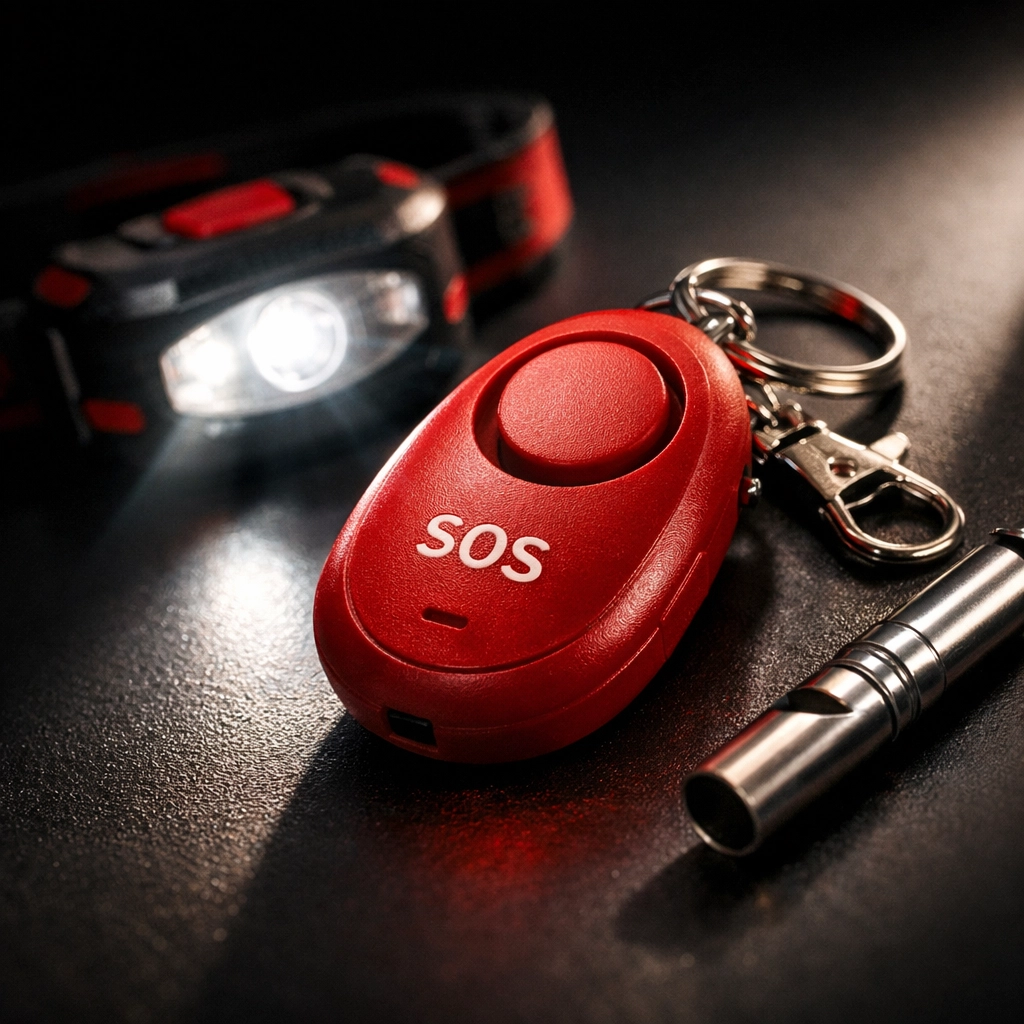
Personal safety alarm: These tiny devices clip onto your bag and emit a 130-decibel screech when activated. They’re loud enough to scare off threats and attract attention. Unlike pepper spray, they’re legal everywhere and you don’t need training to use them.
Flashlight or headlamp: Not your phone’s flashlight (save that battery!). A small LED flashlight lets you navigate dark stairwells, check subway platforms, or walk through parks when streetlights are out. Headlamps are even better because they free up your hands.
Whistle: Old school but effective. Weighs nothing, never needs batteries, and cuts through urban noise.
Hydration and Nutrition (Compact Edition)
You can’t exactly carry a five-gallon water jug on the 6 train, but dehydration during a long walk home is real.
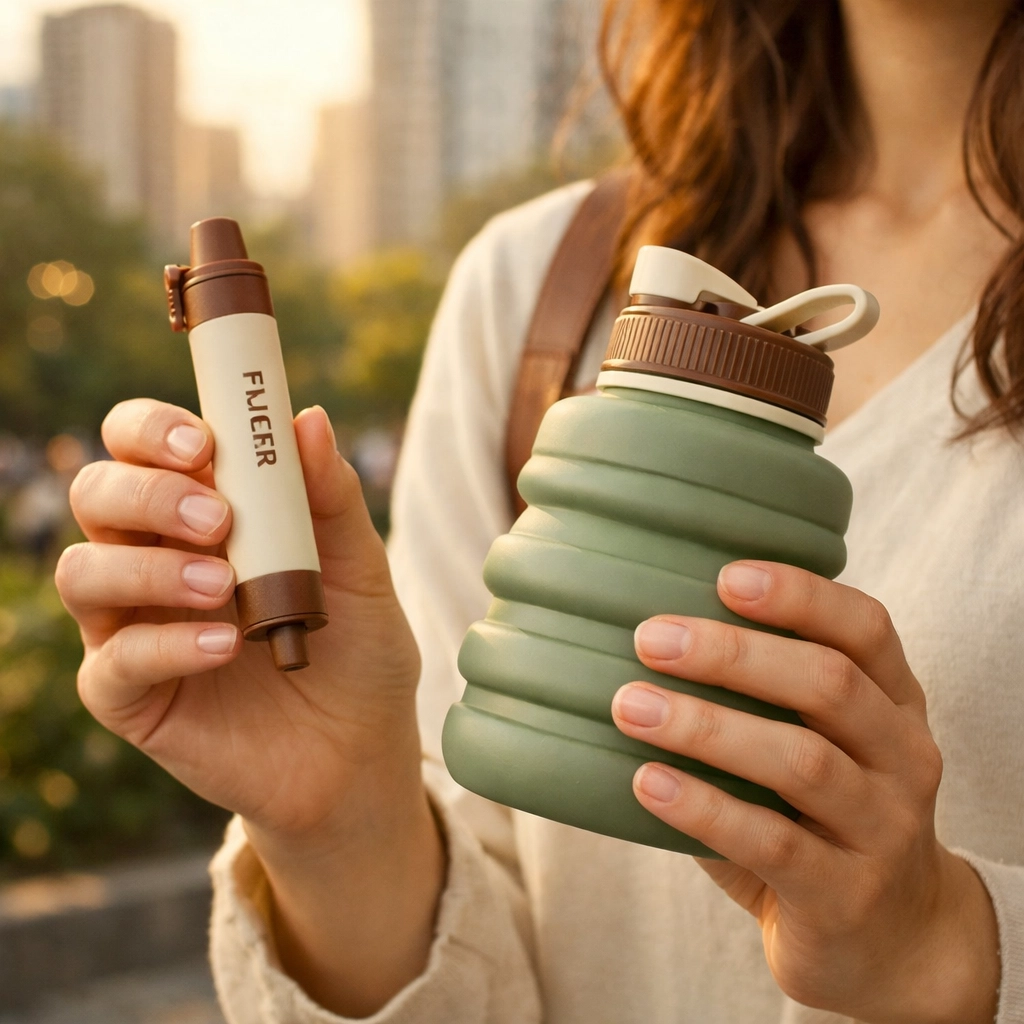
Water filtration straw or compact bottle with filter: These miracle devices let you drink from water fountains, park fixtures, or even questionable sources in true emergencies. A LifeStraw weighs less than two ounces and filters up to 1,000 gallons. That’s a lot of “getting home safely.”
Collapsible water bottle: When you find safe water, you need something to carry it in. These fold flat when empty and expand to hold 16-20 ounces.
Water in packets: Yes, they exist! Lightweight and easy to carry, they may not hold as much as a bottle, but they provide clean, refreshing water when the tap water is unsafe or not running at all.
High-calorie snacks: Energy bars, nuts, or even those protein balls from Trader Joe’s. Something that won’t melt, crush, or go bad quickly. You’re not planning a feast; you just need fuel to keep moving.
The Urban Essentials Nobody Mentions
Here’s where city prep gets specific:
Cash in small bills: ATMs fail during emergencies, and that bodega on the corner might still be selling water, but only for cash. Keep $40-60 in ones, fives, and quarters. Yes, quarters matter. Vending machines, pay phones (they still exist!), and bus fare when your card won’t work.
Backup transit pass: Store one separately from your daily card. Systems get wonky during emergencies, but sometimes one works when the other doesn’t. And make sure you have the latest schedules for both the bus and train.
Paper map of your city: I know, I know: very 2003 of me. But when your phone dies, because, of course, you don’t have them memorized, and your phone might be dead or broken, and you need to navigate around blocked streets, this foldable map is priceless. Circle your home, your workplace, and hospitals in pen.
Emergency contact card: Write down key phone numbers on actual paper. Because if you don’t have them memorized, your phone might be dead or broken and you can’t access that information.
Basic first aid supplies: Band-aids, pain relievers in packets you can get at the checkout line, any prescription meds you can’t miss a dose of, and yes: menstrual products. They serve double duty for first aid in a pinch.
Space blanket: These fold down to smaller than a deck of cards but can keep you warm if you’re stuck outside. They’re especially useful if you need to wait out a situation in a park or transit station.
Face mask or bandana: For dust, smoke, or air quality issues that come with urban emergencies.
Packing It All Without Looking Like a Prepper
The secret is organization. Use small pouches or ziplock bags to group items by category:
- Tech pouch: charger, cables, earbuds
- First aid pouch: bandaids, meds, personal items
- Survival pouch: water straw, space blanket, multi-tool
- Cash and documents: stored in a waterproof case
Everything fits in your regular bag without adding noticeable bulk. Most people won’t even realize you’re carrying emergency gear: it just looks like you’re organized.
When to Upgrade Your Kit
As seasons change, adjust your bag. Winter means adding hand warmers and lip balm. Summer requires extra water capacity and sunscreen. Rainy season? Compact rain poncho.
If you don’t have set seasons, at least review your kit every few months. Replace expired snacks, charge your power bank, and update those screenshots of your route home. Your emergency kit is only useful if it’s current.
The Bottom Line
Emergency preparedness doesn’t require a car, a house, or a massive budget. It requires thinking critically about your actual life and the challenges you’d actually face.
When the next power outage hits, the subway stalls, or the weather shuts down transit, you won’t be stuck frantically calling Uber with a dead phone while your feet bleed in designer heels. You’ll have options, resources, and the confidence to get yourself home safely.
That’s what urban preparedness looks like. Not a bunker full of supplies: just a smartly packed tote and the knowledge to use what’s in it.
Your city girl emergency kit isn’t about doomsday scenarios. It’s about being ready for the much more likely scenario: getting home when the normal stuff doesn’t work. And honestly? That peace of mind is priceless.
Ready to level up your urban preparedness game? Check out my latest podcast episode where I break down more city-specific survival strategies, and sign up for my newsletter for weekly tips that actually fit your lifestyle. Because you deserve emergency advice that works for real life, not some homesteader fantasy.