
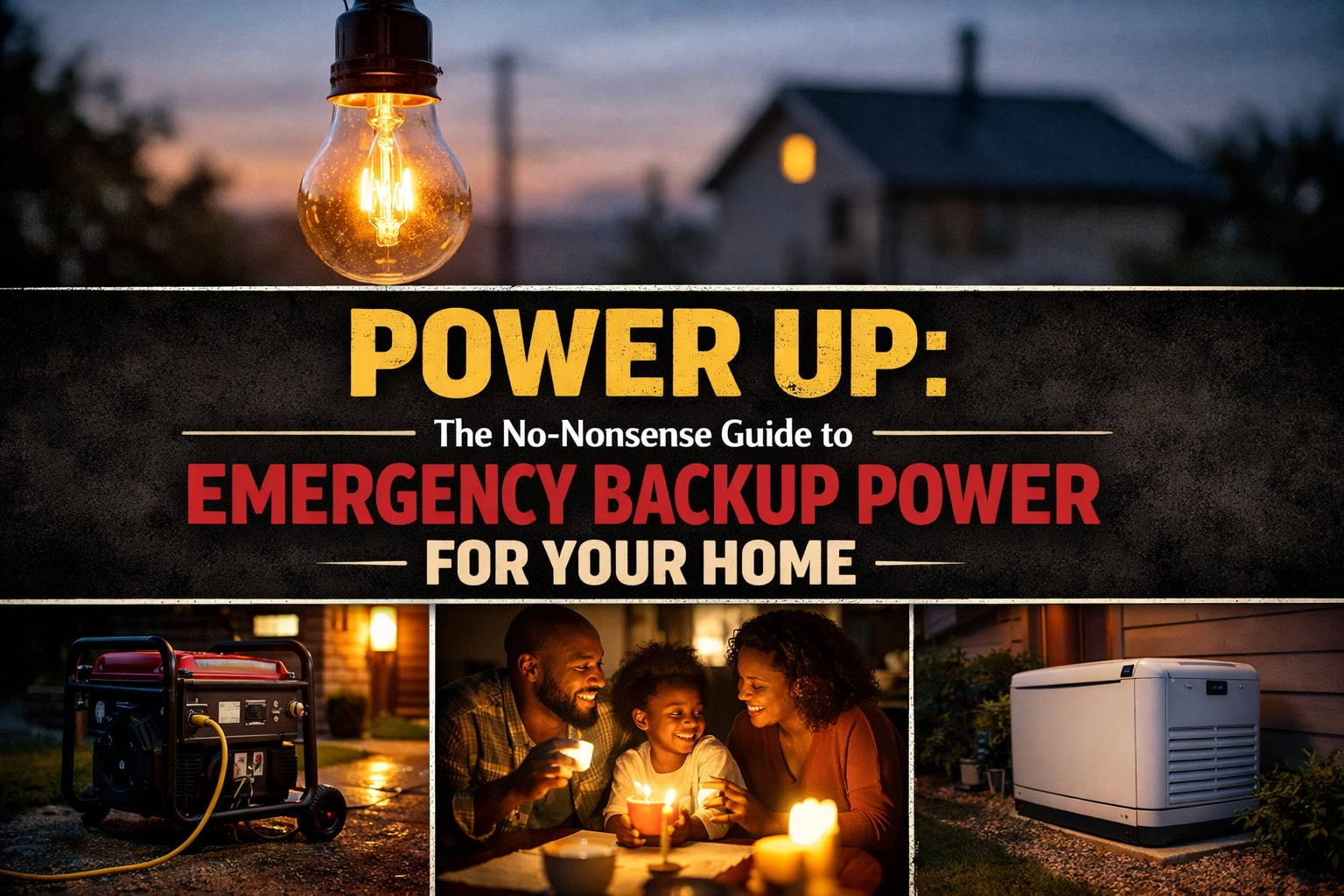
There is a specific kind of sinking feeling that happens when the lights flicker, the hum of the refrigerator stops, and the house goes silent. For a few seconds, you hold your breath, hoping it’s just a momentary glitch. But when the streetlights outside are dark too, the reality sets in: the power is out. Do you have an emergency backup for your home?
For many of us living in apartments or managing households as single moms, a power outage isn’t just an inconvenience. It disrupts our safety, our work-from-home schedules, and our ability to keep our kids fed and calm. While the “traditional” prepping world often suggests massive whole-home generators that cost five figures and require a backyard, that simply isn’t a reality for the average urban lady prepper.
We need solutions that fit into closets, don’t emit toxic fumes, and don’t require a degree in mechanical engineering to start. This guide breaks down the different tiers of backup power so you can decide which investment makes the most sense for your living situation and your budget.
Tier 1: Power Banks (The Communication Lifeline)
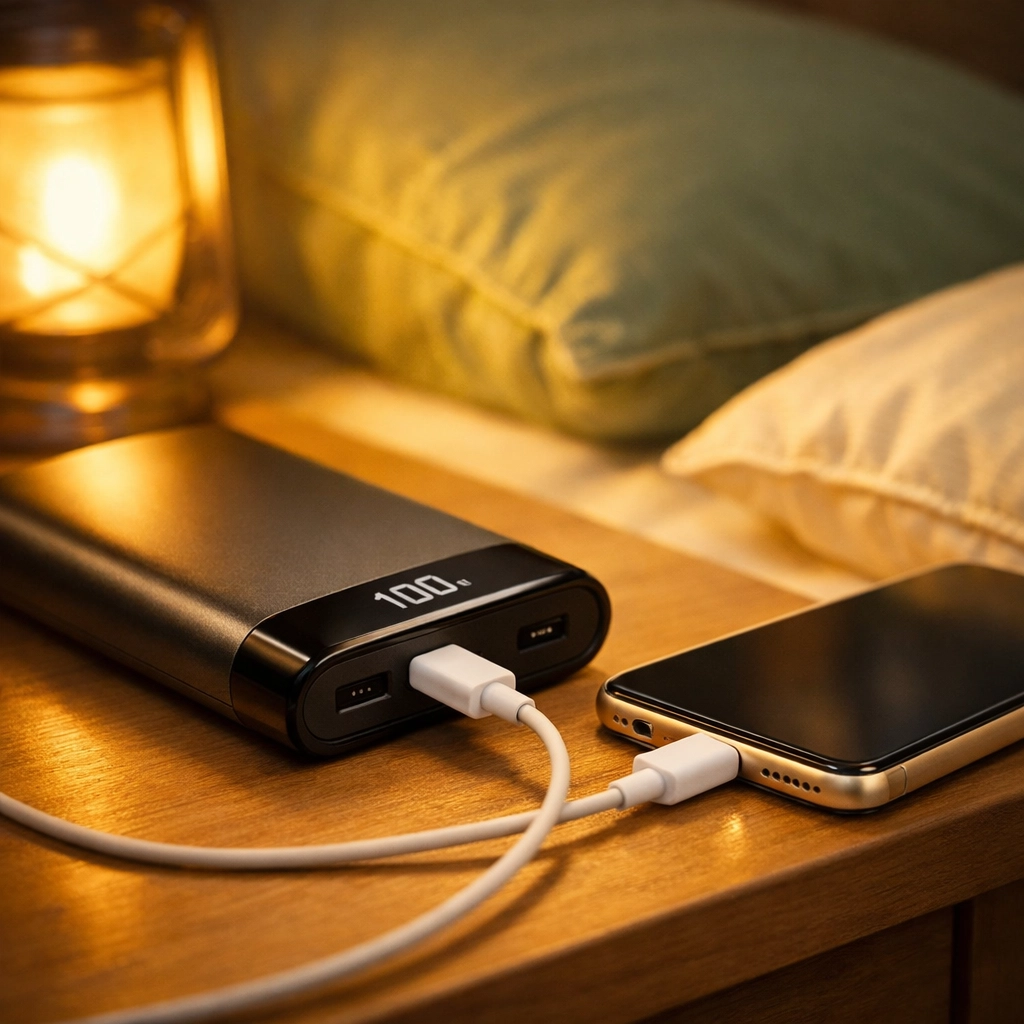
If you are just starting your preparedness journey, power banks are your first line of defense. These are small, portable batteries primarily designed to charge smartphones, tablets, and rechargeable headlamps.
In the modern world, your phone is your most important survival tool. It is how you receive emergency alerts, check in with family, and stay updated on school closures. Losing your phone battery during an outage can lead to a sense of isolation and panic.
The Pros:
- Affordability: You can pick up a high-quality power bank for $30 to $60.
- Portability: They fit in a purse or a “go-bag.”
- Ease of Use: If you can plug in a USB cable, you can use a power bank.
The Cons:
- Capacity: They won’t run a coffee maker or a fan. They are strictly for small tech.
- Maintenance: They lose their charge over time. You have to remember to top them off every few months.
For those of us managing kids solo, having a dedicated “emergency” power bank that stays in a specific drawer can be a lifesaver. It ensures that even if you forgot to charge your phone before the storm, you aren’t cut off from your support system. This is a key component of a solid school communication plan, as it keeps you reachable when things get chaotic.
Tier 2: Uninterruptible Power Supply (The WFH Essential)
An Uninterruptible Power Supply (UPS) is a device that sits between your wall outlet and your electronics. It contains a battery that kicks in instantly, within milliseconds, the moment it detects a drop in voltage or a total power failure.
For the woman who works from home or runs a business from her apartment, a UPS is less about long-term survival and more about data protection. It gives you those precious 10 to 15 minutes to save your documents and properly shut down your computer rather than having it crash and lose hours of work.
The Pros:
- Instant Switch: Your internet router or computer won’t even realize the power went out.
- Surge Protection: It protects expensive electronics from the “brownouts” that often precede a total blackout.
- Compact: They usually fit right under a desk.
The Cons:
- Short Runtime: Most consumer-grade UPS units are designed to last for minutes, not hours.
- Weight: They are surprisingly heavy due to the lead-acid batteries inside.
- Noise: They often beep loudly when the power goes out to alert you, which can be annoying if you’re trying to stay calm.
If you are prepping on a budget, a UPS might feel like a luxury, but if your livelihood depends on your computer, it is a non-negotiable. It keeps your Wi-Fi router running for a short time, which can be critical for downloading emergency maps or instructions before cell towers become congested. Thanks to @hollyingraham3980 from my YouTube community for reminding me about this power source!
Tier 3: Portable Power Stations (The Apartment Gold Standard)
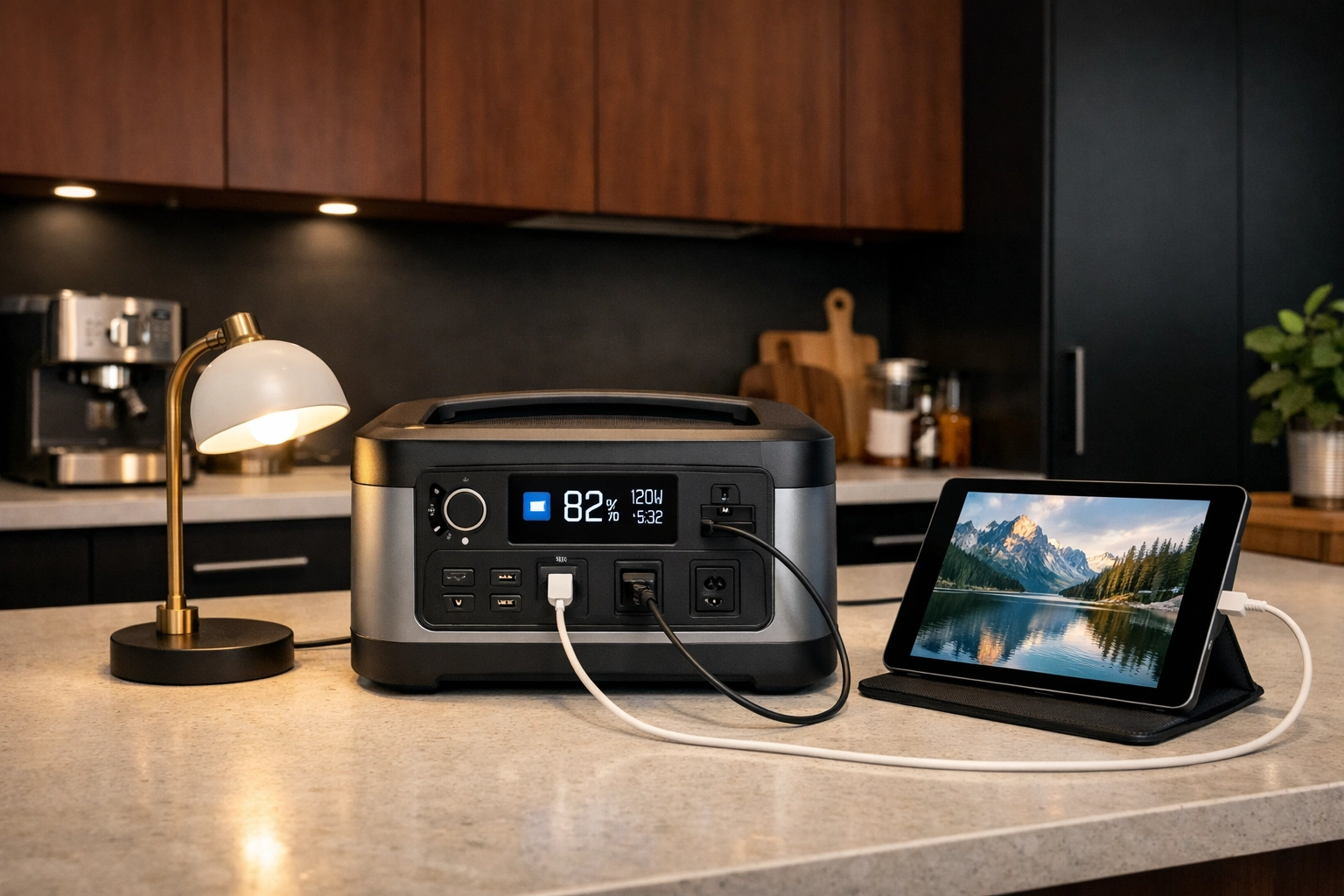
Often marketed as “solar generators,” portable power stations (like those from Jackery, EcoFlow, or Bluetti) are essentially giant lithium batteries with built-in inverters. They have standard wall outlets, USB ports, and sometimes even 12V “car” ports.
This is the sweet spot for urban dwellers. Because they don’t use gasoline, they are completely safe to use inside a living room or bedroom. They are silent, emission-free, and can power everything from a laptop to a small fan or even a high-efficiency 12V fridge. Over the last couple of years, I have purchased two, and they have paid for themselves because my power often goes out during severe weather. Having a light source, the means to charge my phone, and run my laptop was everything, especially when I did not have power for 30 hours (you can read about that here.
The Pros:
- Safety: Zero risk of carbon monoxide poisoning.
- Versatility: Can charge phones dozens of times or run a CPAP machine through the night.
- Rechargeability: You can recharge them via a wall outlet, a car charger, or solar panels propped up in a sunny window or on a balcony.
The Cons:
- Cost: This can be a significant investment, often ranging from $300 to over $2,000, depending on the capacity (I caught mine on Prime Day at Amazon and saved quite a lot on a mid-level model).
- Capacity Limits: Most mid-range units will not run high-heat appliances like a hair dryer, a toaster, or a full-sized space heater…and sadly, a coffeemaker. Found that out the hard way!
When you are looking at how to prep your apartment for winter blackouts, a small power station is often the best “big” purchase you can make. It provides peace of mind, letting you keep a light on for the kids and keep your devices charged for days, not just hours.
Tier 4: Traditional Generators (The Heavy Hitters)
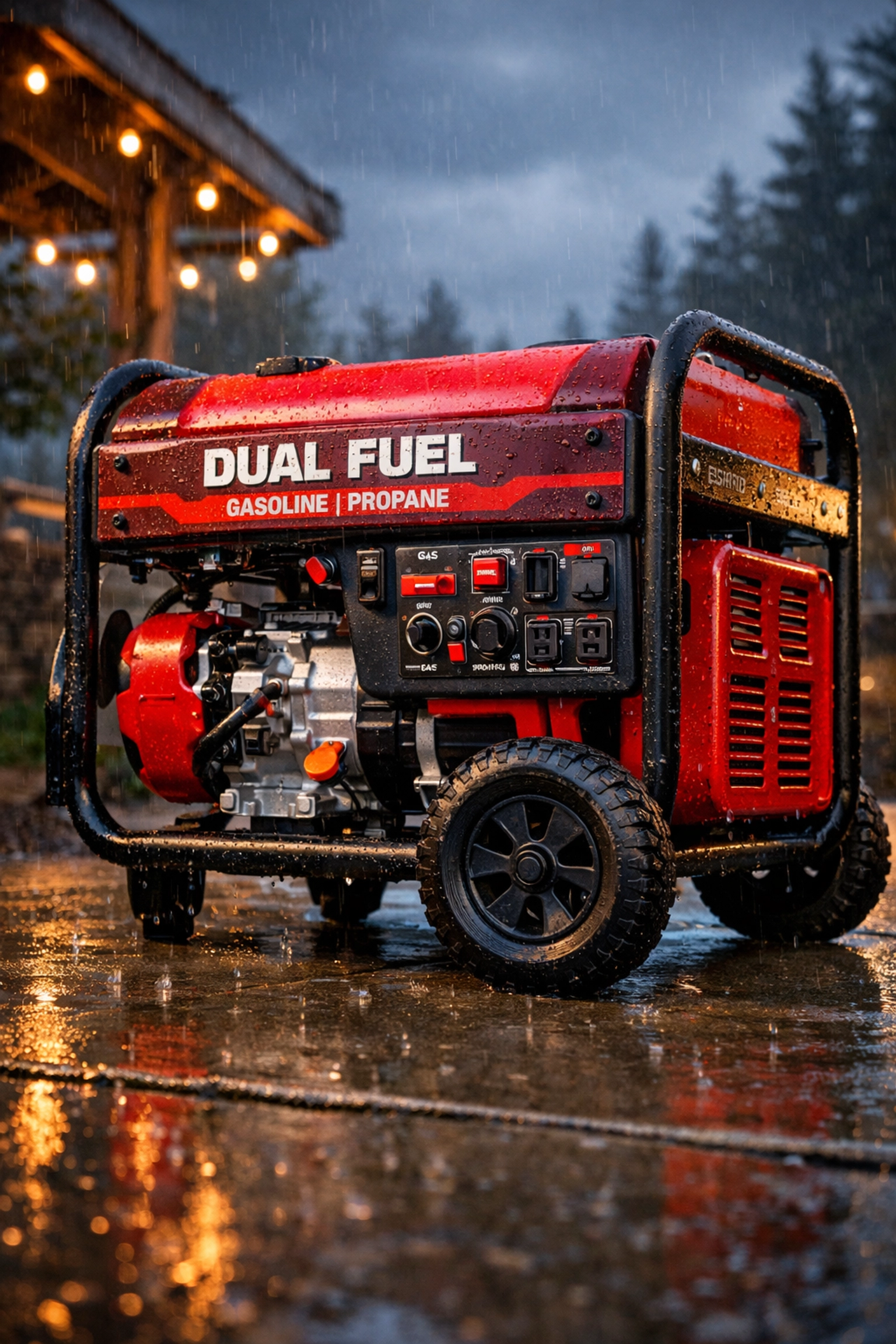
Traditional generators run on fuel, usually gasoline, propane, or diesel. They are the powerhouses of the backup world, capable of running refrigerators, sump pumps, and even air conditioners.
However, for the average urban lady prepper, these are often the most expensive, least practical, and most dangerous options. They produce deadly carbon monoxide and must be operated at least 20 feet away from any window or door. If you live in an apartment with no private outdoor space, a gas generator is a flat-out “no.”
The Pros:
- Raw Power: They can keep your entire kitchen running.
- Runtime: As long as you have fuel, you have power.
The Cons:
- Noise: They are incredibly loud, which can draw unwanted attention in a survival situation.
- Fuel Storage: Storing gasoline in an apartment or a small shed poses a fire hazard and is often prohibited by lease agreements.
- Maintenance: They require oil changes and regular “exercise” to ensure they start when you need them.
If you live in a suburban home with a yard, a dual-fuel generator (gas and propane) is a fantastic tool. But if you are in a high-rise or a tight urban row house, steer clear and stick to battery-based solutions to avoid one of the most dangerous power outage mistakes.
How to Decide What You Need
Choosing the right power source depends on three main factors: your living space, your “must-run” appliances, and your budget.
1. Assess Your Space
If you have zero outdoor space, your list starts and ends with power banks and portable power stations. Do not be tempted to run a generator on a balcony; the fumes can still enter your home or your neighbor’s home with deadly consequences.
2. Do the Math
Look at the labels on your devices. Most laptops use about 60-100 watts. A small LED lamp uses 10 watts. A full-sized refrigerator uses about 100-200 watts but has a “surge” of much more when the compressor kicks in. If you want to keep food from spoiling, check out our guide on keeping food safe when the lights go out to see whether a power station can handle the load or if you can get by without needing the fridge at all.
3. The Tiered Approach
Don’t feel like you have to buy a $1,500 power station today. Start with Tier 1. Buy two high-quality power banks. Next, if you work from home, invest in a mid-range UPS. Finally, save up for a portable power station that can handle a light and a small fan.
Safety First: A Note on Cords and Carbon Monoxide
Regardless of which system you choose, safety is paramount.
- Never use a gas generator indoors, in a garage, or near an open window.
- Never “backfeed” your home by plugging a generator into a wall outlet. This can kill utility workers trying to fix the lines.
- Extension Cords: Use heavy-duty, outdoor-rated cords for generators, and ensure they aren’t a tripping hazard in the dark.
Summary Checklist for Backup Power
- For the Apartment Dweller: Focus on high-capacity power banks and a portable power station (300Wh to 500Wh is a great starting point).
- For the WFH Professional: Add a UPS to your office setup to prevent data loss.
- For the Budget-Conscious: Start with two 20,000mAh power banks and a set of rechargeable LED lanterns.
- For the Homeowner with a Yard: Consider a dual-fuel portable generator for long-term outages, but keep a power station for “indoor” quiet power at night.
Power outages are stressful, but they don’t have to be a disaster. By choosing the right backup source for your specific needs, you’re taking a massive step toward self-reliance. You’re ensuring that when the world goes dark, your home remains a place of light and safety for you and your family.
Ready to Level Up Your Prep Game?
Want more budget-friendly prep tips and real talk about emergency readiness for urban women? Sign up for my newsletter and get practical advice delivered straight to your inbox: no doomsday fear-mongering, just helpful info you can actually use.
And don’t forget to check out my latest podcast episode, where I’m diving deep into apartment prep strategies that actually work. Because being prepared should fit your life, not the other way around.